


- University of the Pacific's annual Pacific Gives day of giving raised a record-breaking $3 million for student programs and scholarships.
- More than 6,000 donors participated—an all-time high—with contributions from all 50 U.S. states and over 30 countries.
- Since its launch in 2017, Pacific Gives has grown into one of the most impactful single-day fundraising events at any West Coast Conference institution.
Donor Count: Over 6,000 (all-time participation record)
Geographic Reach: All 50 U.S. states and 30+ countries
Event Date: April 26, 2026
Program Founded: 2017
In higher education, a single day of giving can signal far more than a fundraising total. It can reveal the depth of an institution's alumni network, the loyalty of its community, and the confidence donors place in its academic mission. On Sunday, April 26, 2026, the University of the Pacific (Pacific Tigers) demonstrated all three, raising a record-breaking $3 million during Pacific Gives, the university's annual 24-hour philanthropic campaign. The milestone represented not only the largest single-day haul in the event's history but also a new high-water mark for donor participation.
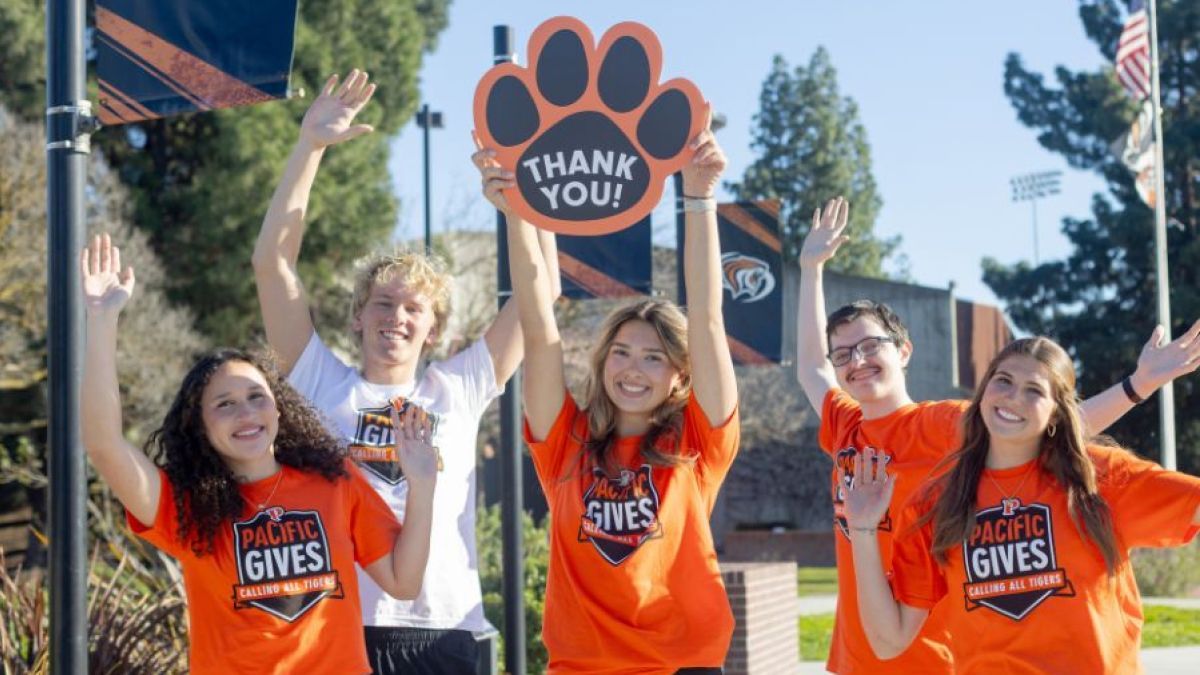
For a private university in Stockton, California—one that serves a remarkably diverse student body across three campuses—reaching this threshold carries particular weight. Pacific has long balanced its commitment to accessibility with the financial realities that face tuition-dependent institutions. When more than 6,000 individual donors step forward in a single day, it sends a clear message: the Tiger community is invested in the institution's future in tangible, measurable ways.
What Is Pacific Gives, and Why Has It Grown So Rapidly?
Pacific Gives launched in 2017 as part of a growing national trend in higher education: condensed, high-energy days of giving designed to unite alumni, current students, parents, faculty, staff, and friends around a shared philanthropic goal. The concept draws from the same playbook as Giving Tuesday, but narrows the focus to a single institution. Since its inception, Pacific Gives has raised millions for scholarships, academic programs, and student support services, with each successive year building on the momentum of the last.
The 2026 edition shattered previous records on two fronts. First, the $3 million total eclipsed the campaign's prior fundraising ceiling, continuing what university leadership described as a "record setting streak." Second, donor participation crested above 6,000 for the first time, an indicator that the campaign's reach is expanding beyond habitual major donors to a broader base of everyday contributors. Gifts arrived from all 50 U.S. states and more than 30 countries—a geographic footprint that reflects the global dispersion of Pacific's alumni network and the international composition of its student body.
President Christopher Callahan captured the significance succinctly: "What we accomplished together in just 24 hours is—yet again—extraordinary. I am deeply grateful for this outpouring of generosity and all it will do for our students. The day has ended, but its impact is just beginning." Callahan, who has prioritized donor engagement and student affordability since assuming the presidency, framed the result as a community achievement rather than an administrative one.
Who Benefits from $3 Million in Donor Support?
According to the university, every dollar raised during Pacific Gives is directed toward students and the programs that support their academic success. In practical terms, that means scholarship funding, academic program enhancements, student services, and experiential learning opportunities. For an institution where a significant share of undergraduates rely on financial aid, unrestricted and scholarship-directed giving can be the difference between a student finishing a degree on time and having to take a leave of absence.
Pacific's commitment to student-centered investment is evident across its operations. The university recently expanded its 24/7 tutoring program, ensuring that academic support is available around the clock for students on its Stockton, Sacramento, and San Francisco campuses. Initiatives like these depend, in part, on philanthropic support that supplements tuition revenue and endowment returns. When donors designate gifts to specific schools—such as the Arthur A. Dugoni School of Dentistry, the Thomas J. Long School of Pharmacy, or the Eberhardt School of Business—they fuel the specialized resources that distinguish Pacific's professional programs nationally.
The breadth of participation also matters for institutional metrics. In higher education fundraising, donor count is often valued as highly as total dollars because it demonstrates engagement depth. A campaign that attracts 6,000 contributors—many of whom may give $25 or $50—signals that Pacific's value proposition resonates across income levels and generational cohorts, not just among a handful of wealthy benefactors.
How Does Pacific Gives Compare to Peer Institutions?
The $3 million figure is notable within the context of the West Coast Conference (WCC). While larger WCC institutions like Gonzaga and Santa Clara benefit from bigger alumni bases and, in some cases, higher national profiles, Pacific's per-capita donor engagement is a standout. Raising seven figures in a single day from a relatively tight-knit alumni community of a university with roughly 6,000 students speaks to an unusually high conversion rate—meaning Pacific is turning a large percentage of its reachable audience into active donors.
Nationally, the trend toward single-day giving campaigns has accelerated across both public and private institutions, with some flagship state universities pulling in eight-figure totals. But context matters: Pacific is not competing with the University of Michigan's donor pool. Among mid-sized private universities—particularly those with professional school portfolios in health sciences, law, and engineering—a $3 million single-day result is a strong signal that advancement operations are executing effectively and that the institution's brand carries real affective loyalty among graduates.
The global dimension adds another layer. Gifts from more than 30 countries underscore the reach of Pacific's international alumni, many of whom passed through the university's pharmacy, dentistry, and engineering programs. These fields have long served as pipelines for international students seeking U.S. professional credentials, and the willingness of those alumni to give back from abroad suggests that Pacific's investment in their careers paid dividends—both for the graduates themselves and for the institution's philanthropic pipeline.
What Does This Mean for Pacific's Broader Trajectory?

Pacific Gives does not exist in a vacuum. The fundraising milestone arrives during a period of visible momentum across the university. On the athletics side, the Pacific Tigers made headlines this spring with their first-ever appearance in the WCC Tournament, a landmark moment that galvanized campus pride and alumni attention. Events like these have a halo effect on donor engagement: when an institution is generating positive news cycles, alumni are more likely to open emails, click giving links, and participate in campaigns.
Under President Callahan's leadership, Pacific has pursued a strategy that ties fundraising directly to student outcomes—affordability, retention, career placement, and experiential learning. The Pacific Gives structure reinforces that narrative by making every gift, regardless of size, feel connected to a tangible student impact. That messaging discipline, combined with a multichannel digital campaign and peer-to-peer fundraising challenges, is a formula that appears to be compounding year over year.
For current students and prospective Tigers, the practical takeaway is straightforward: the university's resource base is growing, and it is growing because people who know Pacific best—its own graduates—are choosing to reinvest. If you count yourself among that community, wearing your Pacific pride is one of the simplest ways to stay connected. The Always A Tiger Burns Tower T-Shirt is a fitting reminder that the bond between Pacific and its alumni endures well beyond commencement.
What Comes Next for Pacific Gives and University Fundraising?
The $3 million threshold, impressive as it is, likely represents a stepping stone rather than a ceiling. Since 2017, Pacific Gives has demonstrated a consistent upward trajectory in both dollars raised and donor count. If that trendline holds, university advancement leaders will be eyeing the $4 million mark as a realistic medium-term target, particularly if they can continue expanding the donor base among younger alumni who graduated in the 2010s and 2020s.
The challenge—and it is one that every institution faces—is sustaining engagement between giving days. Annual campaigns generate spikes of enthusiasm, but long-term philanthropic health depends on converting one-time donors into recurring supporters. Pacific's strategy of tying every gift to direct student impact is a strong foundation for that retention effort. When donors see that their contribution funded a scholarship, supported a lab upgrade, or underwrote a tutoring program, they are more likely to return the following year.
For the University of the Pacific, the 2026 Pacific Gives campaign is both a celebration of community and a data point in a larger story. That story is one of a regional university with national ambitions, a diverse student body with high aspirations, and an alumni network that—across 50 states and more than 30 countries—continues to believe that investing in Pacific is worth it. The day may have lasted only 24 hours, but as President Callahan noted, its impact is just beginning.
