


- Clinical nutrition and social work students at University of the Pacific collaborated at the Sacramento Campus Community Garden for a hands-on interprofessional learning activity focused on holistic care.
- Students worked through case studies centered on refugee communities from Ukraine, Syria, and Afghanistan, exploring the intersections of nutrition, mental health, culture, and resource access.
- Professor Nurit Fischer-Shemer, coordinator for interprofessional education, led the session, which exemplifies Pacific's commitment to experiential, community-centered learning.
Date: April 24, 2026
Programs Involved: Clinical Nutrition, Social Work
Focus Populations: Refugee communities from Ukraine, Syria, and Afghanistan
Lead Faculty: Professor Nurit Fischer-Shemer, Coordinator for Interprofessional Education
In an era when healthcare professionals are increasingly called upon to address not just symptoms but the social, cultural, and environmental determinants of health, universities face the challenge of preparing students for that complexity before they ever enter the workforce. On Thursday, April 24, 2026, University of the Pacific brought that challenge to life at the Sacramento Campus Community Garden, where clinical nutrition and social work students stepped away from the lecture hall and into the soil for a hands-on interprofessional learning activity centered on holistic care for refugee populations.
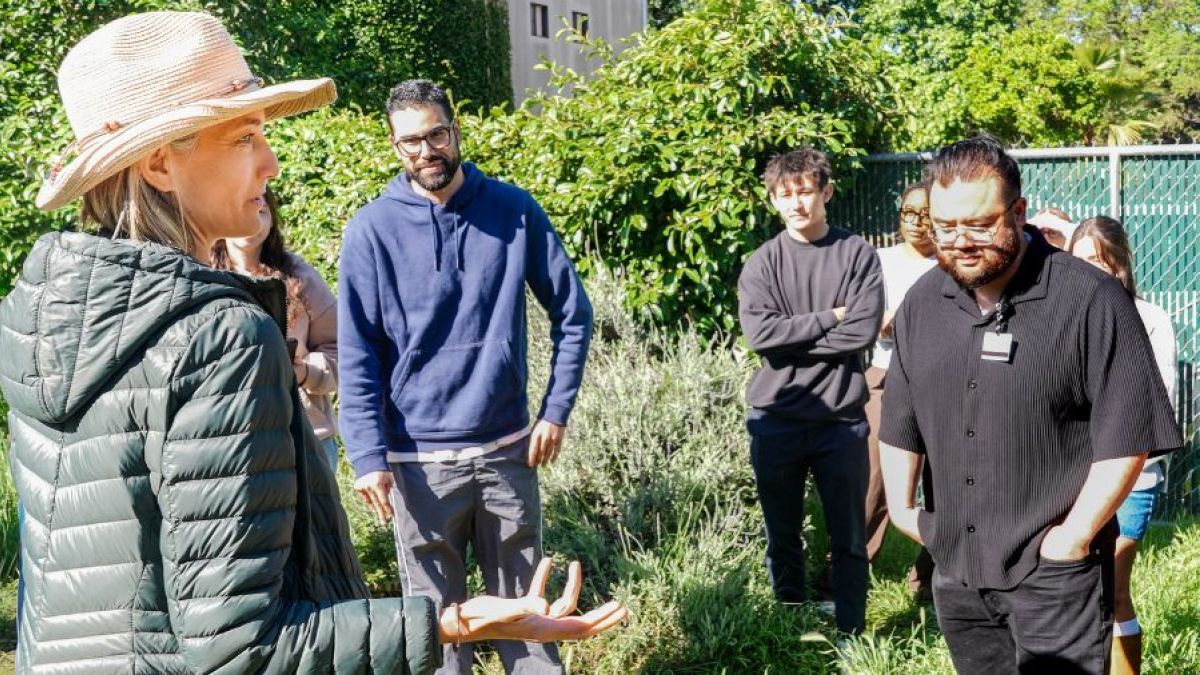
The session, led by Professor Nurit Fischer-Shemer, coordinator for interprofessional education at Pacific, asked students to engage with case studies involving refugees from Ukraine, Syria, and Afghanistan — three communities with distinct cultural foodways, trauma histories, and barriers to accessing nutritious food. The result was a learning experience that transcended disciplinary boundaries and modeled the kind of collaborative practice that the modern healthcare landscape demands.
What Does Interprofessional Education Look Like in a Garden?
Interprofessional education — the practice of training students from two or more health and human services disciplines together so they learn to collaborate effectively — has become a cornerstone of accreditation standards across healthcare fields. The World Health Organization has long advocated for interprofessional learning as a pathway to stronger health systems, and Pacific's Sacramento Campus has embraced this model with a distinctive twist: grounding it, quite literally, in the earth.
At the Sacramento Campus Community Garden, students did not simply discuss holistic care in the abstract. They worked with herbs, plants, and vegetables that carry cultural significance for the refugee communities they were studying. As Professor Fischer-Shemer explained in Pacific's newsroom coverage, "We are collaborating to learn about herbs, plants and vegetables that can be incorporated into the diets of refugee communities in the Sacramento area." The hands-on nature of the exercise — touching, planting, identifying edible species — added a sensory dimension that classroom case studies alone cannot replicate.
By pairing clinical nutrition students, who bring expertise in dietary science, with social work students, who are trained to assess psychosocial needs and systemic barriers, the activity created a microcosm of the interprofessional teams that serve vulnerable populations in real-world practice. Students explored how nutrition, mental health, cultural identity, and access to resources intersect to shape health outcomes — a framework that mirrors the social determinants of health model increasingly adopted by hospitals, community health centers, and public health agencies nationwide.
Why Focus on Refugee Communities in Sacramento?
The choice of refugee populations as the focus for this activity was anything but arbitrary. Sacramento has long been one of the most significant refugee resettlement hubs in the United States. According to the California Department of Social Services, the Sacramento region has historically received more refugees per capita than nearly any other metropolitan area in the country. Communities from Ukraine, Syria, and Afghanistan — the three populations at the center of Pacific's case studies — represent some of the largest and most recent waves of resettlement driven by conflict and displacement.
For Pacific students training in clinical nutrition and social work, this geographic reality means their future caseloads will almost certainly include clients navigating cultural dislocation, food insecurity, language barriers, and the psychological toll of forced migration. Understanding the dietary traditions of these communities — which herbs and vegetables carry not just nutritional value but also emotional and cultural significance — is a clinical competency, not an optional elective interest. The garden activity transformed that competency from a textbook concept into a tangible skill.
Sacramento's diversity also makes Pacific's three-campus model — spanning Stockton, Sacramento, and San Francisco — a strategic advantage. Students on the Sacramento Campus have direct proximity to the refugee-serving organizations, community health clinics, and resettlement agencies where this kind of holistic, culturally informed care is most urgently needed. The garden itself serves as a bridge between the university and the broader Sacramento community, reinforcing Pacific's mission of community engagement and service.
How Does This Reflect Pacific's Broader Academic Mission?
Pacific has long distinguished itself among West Coast Conference (WCC) institutions through its emphasis on professional preparation and experiential learning. The university's graduate health sciences programs — spanning pharmacy, dentistry, nursing, speech-language pathology, and more — are built on the premise that clinical competence requires more than didactic instruction. This garden activity fits squarely within that tradition, extending experiential pedagogy into the intersection of nutrition and social work.
The involvement of Professor Fischer-Shemer as coordinator for interprofessional education signals that this is not a one-off event but part of a structured curricular effort. Interprofessional education coordinators are typically responsible for designing, implementing, and assessing collaborative learning experiences across programs — a role that reflects institutional investment in breaking down the silos that have historically separated health and human services disciplines during training. Pacific's commitment to this model positions its graduates to enter practice settings already fluent in the language of team-based care, a skill set that employers increasingly prioritize.
This kind of cross-disciplinary initiative also complements Pacific's broader investments in student support and academic enrichment. The university has been expanding tutoring services and academic resources to ensure students across programs have the support they need to thrive — a commitment that extends naturally into creating innovative learning experiences like the garden activity.
What Does This Mean for Pacific Students and the Community?

For the clinical nutrition and social work students who participated on April 24, 2026, the immediate takeaway was practical: a deeper understanding of how culturally relevant food practices can be woven into holistic care plans for refugee clients. But the longer-term implications are more significant. These students are building the collaborative habits and cultural humility that will define their professional identities for decades.
The garden activity also reinforces a growing body of evidence in health professions education that outdoor, place-based learning improves retention and engagement. A garden is not merely a backdrop — it is a clinical learning environment where students can observe food systems, practice motivational interviewing techniques with peers role-playing as clients, and develop nutrition education materials grounded in real, locally available produce. The Sacramento Campus Community Garden, in this sense, functions as both a classroom and a community asset.
For Pacific alumni who remember the university's longstanding emphasis on service and community impact, this activity represents a natural evolution. The same institutional DNA that has produced generations of pharmacists, dentists, lawyers, and educators in California's Central Valley is now producing clinical nutritionists and social workers trained to serve some of the state's most vulnerable populations with cultural competence and interdisciplinary fluency. Those who want to celebrate that tradition can do so with the Always A Tiger Burns Tower T-Shirt, a nod to Pacific's iconic campus landmark and enduring community pride.
What Comes Next for Interprofessional Learning at Pacific?
The Sacramento Campus Community Garden activity is one data point in what appears to be an expanding portfolio of interprofessional education initiatives at Pacific. As healthcare systems continue to evolve toward value-based care models that reward outcomes rather than volume, the ability to work across disciplines is no longer a soft skill — it is a core competency. Programs that embed this competency early, through hands-on activities rather than passive lectures, are positioning their graduates at the front of the hiring line.
Professor Fischer-Shemer's role as interprofessional education coordinator suggests that Pacific is building the infrastructure to scale these experiences across additional programs and campuses. Future iterations could involve pharmacy, nursing, or physician assistant students, further enriching the interprofessional dynamic. The garden itself could become a recurring site for community health fairs, nutrition workshops, or collaborative research projects involving faculty and students from multiple disciplines.
For a university that has thrived for more than 170 years by adapting to the needs of its students and its region, the Sacramento Campus Community Garden activity is both a reflection of Pacific's heritage and a signal of where it is headed. In a healthcare landscape that demands collaboration, cultural competence, and holistic thinking, Pacific is planting the seeds — quite literally — for the next generation of professionals prepared to meet the moment.
