


- University of the Pacific launched a $150 million campaign on Wednesday, May 28, 2026, to establish the Central Valley's first MD-granting medical school.
- More than $25 million in early commitments have already been secured from major donors, including Regent Tony Chan '77 and former Regent Virginia Chan '77.
- The new School of Medicine aims to address the region's severe physician shortage by training doctors locally and improving long-term health outcomes.
Early Commitments: More than $25 million secured before public launch
Distinction: First MD-granting medical school in California's Central Valley
Launch Date: Wednesday, May 28, 2026
Notable Donors: Regent Tony Chan '77 and former Regent Virginia Chan '77
California's Central Valley is one of the most medically underserved regions in the nation — a sprawling agricultural heartland home to roughly 6.5 million residents, yet chronically short of the physicians needed to serve them. On Wednesday, May 28, 2026, the University of the Pacific (Pacific Tigers) took a landmark step toward changing that reality by publicly launching a $150 million fundraising campaign to establish a new School of Medicine in Stockton, California. It would be the first MD-granting medical school the region has ever had.
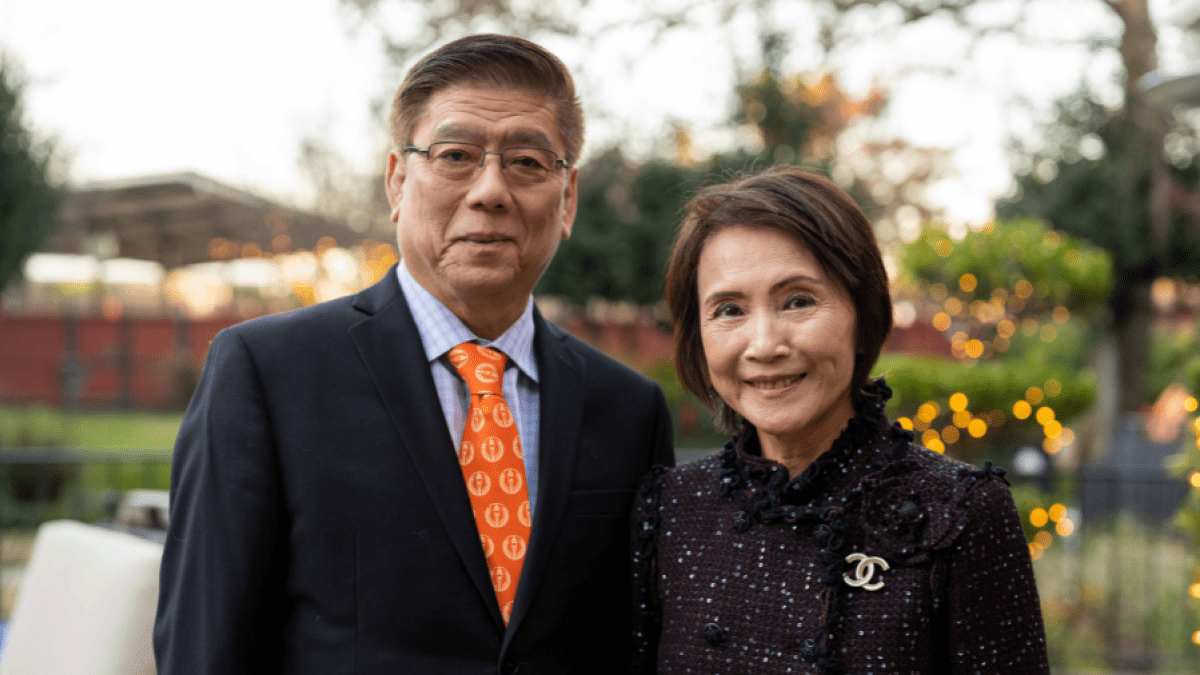
What makes the announcement especially noteworthy is the pace of philanthropic support. Before a single press release hit the public, Pacific had already secured more than $25 million in commitments from several major donors, signaling deep confidence in the university's ability to execute. Among the early supporters are Regent Tony Chan '77 and his wife, former Regent Virginia Chan '77, whose connection to Pacific underscores the alumni-driven momentum behind the initiative. The early financial foundation provides not just capital but a powerful endorsement of the school's vision — a signal to prospective students, faculty recruits, accreditation bodies, and other donors that this initiative has serious institutional backing.
Why Does the Central Valley Need Its Own Medical School?
The physician shortage in California's Central Valley is not a new problem, but it is an intensifying one. The region consistently ranks among the worst in the state for its ratio of physicians per capita. According to data compiled by the California Health Care Foundation, San Joaquin County — where Stockton is located — has roughly 50 primary care physicians per 100,000 residents, well below the state average and far below the benchmarks set by peer metro areas in the Bay Area or Southern California. Rural communities within the valley face even starker numbers.
The consequences of this shortage are measurable and severe. Residents face longer wait times for basic care, higher rates of preventable chronic disease, and limited access to specialists. These gaps disproportionately affect communities of color and lower-income populations. By establishing an MD-granting program rooted in the Central Valley, Pacific aims to create what the university describes as a "pipeline" of locally trained practitioners — physicians who are educated in the community they will eventually serve, increasing the likelihood they will remain there to practice. The approach is supported by extensive research showing that medical students who train in underserved regions are significantly more likely to practice there post-residency.
It is worth noting that Pacific already operates well-regarded professional health programs, including its Arthur A. Dugoni School of Dentistry in San Francisco and its Thomas J. Long School of Pharmacy on the Stockton campus. Adding a School of Medicine would position the university as one of a relatively small number of institutions in the country offering dental, pharmacy, and medical degrees under a single university umbrella — a distinction that carries weight in interprofessional education and collaborative care models. As we covered in our earlier report on Pacific's plans to establish the new medical school, the initiative has been years in the making and reflects a deliberate expansion of the university's health sciences mission.
What Does $25 Million in Early Commitments Signal?
 In higher education fundraising, the quiet phase of a campaign — the period before a public launch — is often the most telling indicator of eventual success. The fact that Pacific crossed the $25 million threshold before going public with its $150 million goal is a strong signal. Major gifts of this scale typically come from donors who have done significant due diligence: reviewing business plans, meeting with university leadership, and evaluating institutional capacity. These are not impulse gifts. They represent a deep, informed bet on Pacific's leadership and infrastructure.
The involvement of Tony and Virginia Chan, both 1977 alumni, adds an important narrative dimension. Their dual connection — as graduates, as university governance leaders, and now as major donors — illustrates the kind of lifelong engagement that Pacific cultivates. It also sends a message to the broader alumni community: if individuals who have served at the highest levels of university oversight are investing their personal resources, the project has cleared a high bar of scrutiny. For Pacific families who already take pride in their connection to the university, this is a moment that deepens that bond. Whether a parent proudly wears a Pacific pride merchandise to a campus event or an alumnus writes a five-figure check, the emotional thread is the same: belief in what Pacific can become.
The remaining gap — roughly $125 million — is substantial, but not unusual for a campaign of this ambition. New medical school launches at peer institutions have historically required capital investments in the $150 million to $300 million range, depending on whether the school builds new clinical facilities or partners with existing hospitals. Pacific's location in Stockton, near several regional health systems, could provide partnership opportunities that reduce the capital footprint. The coming months will likely reveal more about the university's strategy on that front.
How Does This Fit Pacific's Broader Institutional Identity?
Pacific has long defined itself through professional education. Founded in 1851, it is California's oldest chartered university, and its trajectory over the past several decades has been marked by a steady expansion into graduate and professional programs. The Dugoni School of Dentistry, consistently ranked among the top dental schools in the nation, anchors Pacific's San Francisco campus. The pharmacy school in Stockton is one of the largest and most established in the western United States. Adding a medical school does not represent a departure from Pacific's identity — it represents a logical extension of it.
President Christopher Callahan, who has led Pacific's recent strategic planning, has consistently emphasized the university's potential to serve as a regional anchor institution — a university that does not simply educate students but actively shapes the economic, civic, and public health landscape of its home community. A medical school accomplishes all three: it attracts faculty, generates clinical revenue, creates graduate-level jobs, and produces the physicians that Stockton and the surrounding valley desperately need. In an era when many mid-sized private universities are searching for sustainable growth models, Pacific's health sciences strategy offers a compelling case study in mission-aligned expansion.
Who Benefits Most from This Initiative?
The most immediate beneficiaries will be prospective medical students — particularly those from the Central Valley who have historically faced geographic and financial barriers to medical education. California's existing medical schools are concentrated in Los Angeles, San Francisco, San Diego, and Sacramento. Students from Stockton, Fresno, Modesto, and surrounding communities have had to relocate for medical training, and many never return. A Pacific-based MD program could fundamentally alter that dynamic by offering qualified students the option to train close to home, in clinical environments that mirror the communities where they grew up.
The broader community stands to benefit as well. Medical schools serve as magnets for research funding, clinical trials, and specialty care that might otherwise bypass smaller metro areas. They elevate the profile of their host cities in ways that extend well beyond health care, attracting talent, investment, and institutional partnerships. For Stockton — a city that has worked hard over the past decade to shed outdated narratives about economic distress — a medical school represents a powerful statement of civic ambition.
Faculty and staff at Pacific will also feel the ripple effects. Interprofessional collaboration between the medical school, pharmacy school, and dental school could create research and teaching opportunities that are difficult to replicate at institutions without that tri-professional structure. Graduate students across disciplines may find new avenues for collaborative research, and undergraduate students in Pacific's pre-health tracks will have a visible, tangible pathway to an MD on their own campus.
What Comes Next for Pacific's Medical School Campaign?
With the public launch now behind it, Pacific enters the most visible — and arguably most challenging — phase of the campaign. The $150 million goal will require sustained engagement with alumni, corporate partners, health care organizations, and government entities. Accreditation timelines for new medical schools typically span several years, involving preliminary and provisional stages with the Liaison Committee on Medical Education (LCME). Pacific will need to demonstrate that it has the financial resources, clinical partnerships, and faculty infrastructure to meet those rigorous standards.
The early donor momentum is encouraging, but the real test will come in the next 12 to 18 months as the university works to convert interest into commitments and commitments into construction. If the trajectory holds, Pacific could be on track to welcome its first class of medical students within the next several years — a milestone that would reshape the university, the city of Stockton, and the health care landscape of California's Central Valley for generations to come.
For an institution already making waves across athletics — from landing top national water polo recruits to building competitive programs across the West Coast Conference (WCC) — this academic initiative signals that Pacific's ambitions extend well beyond the playing field. The medical school campaign may prove to be the defining project of this era in Pacific's 175-year history.
